
Plumbing for North Texas homes
Dallas–Fort Worth plumber. Price first, then the wrench.
Water heaters, gas lines, slab leaks and worn-out pipe are a good share of what goes wrong in a North Texas house. We find what failed, show you, and tell you what it costs to put right. Nothing starts until you say so.
- Price on the table before a tool comes out
- What broke and why, said plainly
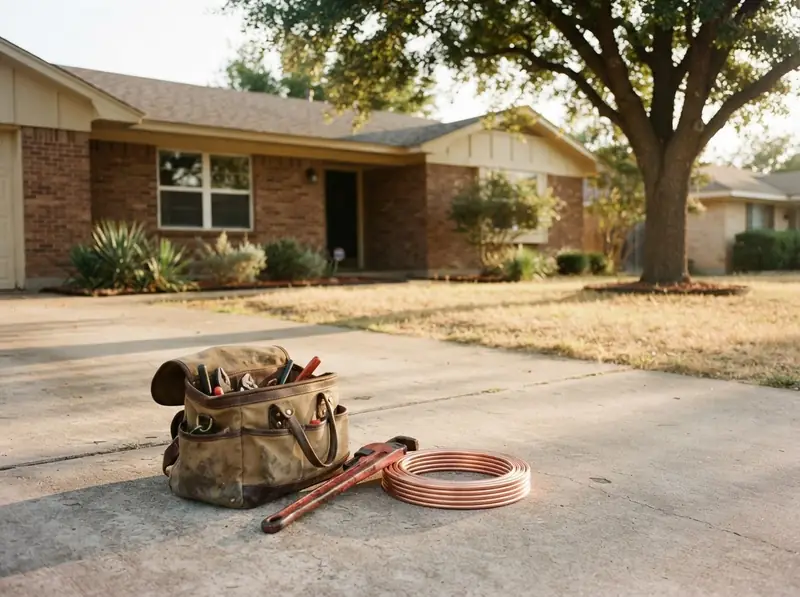
- No tools go back in the bag until the repair passes its test
The heavy end of the work
Hot water, gas and new pipe
These four are the big jobs. Each has a page on what fails, the signs to watch for and the way a sound repair gets done.
 Water HeatersGas and electric tank water heaters repaired when a part will fix them and replaced when the tank is done.See the details →
 Tankless Water HeatersTankless water heaters sized, installed, descaled and repaired, with the gas line and venting checked first.See the details →
 Gas LinesGas leaks on your side of the meter found by pressure test, then repaired or the failing line replaced.See the details →
 RepipingWorn-out galvanized, polybutylene and pinholed copper replaced with new water lines through the attic and walls.See the details →
The rest of the trade
Under the slab, down the drain and at the tap
Leaks you can't see, drains that won't, and the fixtures you use every day.
The one rule
You hear the price before a single fitting is touched.
Then you decide. If the answer is no, nothing has been taken apart.
How we workNo surprises
How a job goes
Four steps, and they're the same four for a leaky tap as for a dug-up sewer.
Start with what you see
Where the water is, what quit working, how old the house is. A few plain details narrow most problems down before a tool comes out.
The plumber finds the cause
Not just the wet spot. The part, joint or pipe that failed and the reason it failed, shown to you and explained in plain words.
You get the price and decide
The price for the repair comes before any work. Nothing is cut, drained or taken apart until you approve it.
The repair is made and tested
Under pressure, under flow or on a gauge, whichever the job calls for. Then the work area is cleaned up.
Know your ground
Why plumbing wears out the way it does here
Four North Texas facts explain most of the repairs on this site.
Clay soil that moves
It swells wet and shrinks dry, and the slab rides along. Pipes under it get flexed for decades, which is where slab leaks and sagging sewer lines come from.
Hard water
Minerals settle in tank water heaters, coat tankless heat exchangers and wear down faucet cartridges and fill valves ahead of schedule.
Pipe from another era
Before the 1960s, galvanized steel water lines. Up to about 1980, cast iron drains. Then gray polybutylene, a late-1970s arrival that hung on into the mid-1990s. Each has its own known way of failing.
The occasional hard freeze
Houses here aren't built for cold. Lines in attics and outside walls split when a real freeze comes, and the leaks show up as things thaw.
Fair questions
Asked before most jobs
Do I get a price ahead of the work?
You do. First the cause gets found and explained, then comes the price for fixing it. Not a thing is started without your say-so.
What part of the Metroplex do you cover?
Dallas–Fort Worth, all of it. You'll find a page apiece here for Fort Worth, Arlington, Keller, Southlake, North Richland Hills, Mansfield, Grand Prairie and Burleson, and the towns in between get the same service.
How do I find the main shut-off for the water?
In most North Texas homes it's in the ground box at the water meter, near the street or the alley. Many houses also have a second valve on the house side of the meter, in the garage or where the line comes through the wall. Go looking for yours while the floor is still dry, and check that the handle moves.
What should I do while I wait for a plumber?
Stop the water first. A fixture with a valve of its own can be shut off right there. Failing that, shut the whole house off at the main. If the water heater is leaking, close the cold supply valve above it. If you smell gas, do none of that. Get everyone outdoors, and once you're out, phone the gas utility or 911.
My house was built in the 1970s or 80s. What should I watch for?
Three things. Cast iron drains under the slab in the older of those houses, which rust rough inside and clog. Gray polybutylene water lines, which fail at the fittings. And copper under the slab, which starts to pinhole at about that age. One leak isn't a verdict, but a second one on the same system is worth a hard look.
Do you work on tankless water heaters?
Yes. We install them, descale them and repair them, and before recommending one we check that the gas line and venting in your house will support it.
Where we work
Fort Worth, Arlington and the towns around them
Dallas–Fort Worth is the territory. Every city below gets a page of its own, with the age of its houses and the kind of pipe that came with them.
Further down the road
- Flush Hour Plumbing of CarrolltonPlumber in Carrollton, TX
- Rapid Response Plumber of GarlandPlumber in Garland, TX
- Wylie Plumbing Co.Plumber in Wylie, TX
- Lone Star PlumberPlumber in DFW
- Steady Hand PlumberPlumber in DFW
- Texas Tough PlumberPlumber in DFW
- The Cowboy PlumberPlumber in DFW